
Why DOGE failed
And how to find the waste

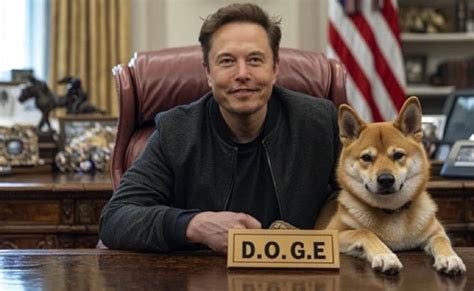
DOGE and Elon Musk’s attempt to reduce spending in the US system is a polarising issue, even now on which it is extraordinarily hard to get to the underlying facts. Some time ago Santi Ruiz did an excellent piece which does just this. Since then, Musk himself seems to have admitted defeat on the whole DOGE experiment.
Setting aside the intense reflected partisanship which prevails in the UK about US politics (almost all in favour of the Democrats), DOGE is genuinely worth scrutinising dispassionately. It is a test case for options as the grim fiscal position and choices facing the government become clear and as the various elements of the UK right turn their minds to practical plans to restructure the state.
This piece will argue there are some bits of the DOGE manual which are well worth looking at. But overall the DOGE approach is looking increasingly threadbare compared to the more systematic approach to spending taken in Milei’s Argentina.
In many ways it is an exercise in wishful thinking, the hope that major fiscal improvements can be made without a lot of effort, political capital or hard choices – and as such it more resembles endless past initiatives in the UK from Rayner to Gershon, Lyons, the early Coalition civil service reform initiatives and even (God help us) Sir Philip Green’s review of UK government procurement. None of these figures had the charisma of Elon Musk, to put it mildly, but all share the triumph of hope over experience, the idea that a quick review through the eyes of distinguished private sector leaders can transform the way public money is spent.
It is instructive comparing this to the approach Javier Milei has taken to deliver genuinely radical spending cuts in Argentina – fundamentally different in most respects from the DOGE playbook. And also to examine one UK case study from my own personal experience that shows how waste actually happens – and the sort of approach that would be needed to drive it out.
There are elements of the ‘fail fast’ approach that are quite admirable. Musk’s willingness to turn stuff off for a while and see what happens has worked brilliantly for him at Tesla, SpaceX and Twitter/X (remember all those solemn assurances that so many engineers were being let go that the actual site would cease to function?). The approach is unheard of in government – but potentially powerful. Civil servants are terrified of the lobbying power of most of the beneficiaries of government largesse. But turning the taps off to see if they can demonstrate the real damage being done and whether they can actually muster the legions of support they always claimed is appealing. However uncomfortable, most properly run institutions ought to be able to survive a 3-6 month pause in funding
There is also something endearing about Musk’s openness to the idea the team will make mistakes and fix them. He certainly needed this, given the rather freelance vibe and the high error rate his teams committed – multiple counting of savings, scoring contracts that have already stopped as a saving, ‘condoms for Hamas’ turning out to be for Gaza province Mozambique etc.
Given the enormous expansion in the Federal budget over recent years, it would be surprising if examples of actual waste, corruption and fraud weren’t out there – though when scrutinised rigorously, DOGE was rarely able to show much evidence. Musk’s very prominence and the obvious resentment of cabinet members was a problem if you are looking to make changes stick.
All of this has strong analogies with the UK coalition government’s Whitehall reform of the early 2010s, where huge and largely spurious claims were made for savings as a result of new digital and commercial controls. Those in the centre prioritised savings over quality and had no accountability for the impact the controls were having on actual programme delivery. Even in the simple procurement space, failures like the collapse of Carillion showed that a narrow focus on cost alone could leave the customers actually more vulnerable in the longer term.
In general, Ruiz argued that ‘Elon looks into problems that are largely driven by institutional capture structural incentives, and overregulation and sees them instead as problems of waste, corruption and fraud’. This I think gets to the heart of the matter. There is plenty of waste, but most bits of waste have strong supporters who aren’t simply venal. And possibly the will to make painful cuts wasn’t really there anyway. I have an outstanding bet of a fine bottle of wine offered to an American reader that Trump will pass on a bigger budget deficit than he inherited - no takers so far.
It’s interesting to contrast this with the position in Argentina. Javier Milei was elected on a blunt message of austerity which has given him a mandate for a fiscal restructuring of a scale that most advanced countries have never seen in their entire history. State spending as a proportion of GDP has fallen from 44% to 32% in a single year.
Spending reductions of that scale are not going to be achieved by targeting ‘woke’ spending lines. Milei’s strategy seems largely to have been to combine deregulation and spending reductions at the same time, in the hope that the growth rebound will be all the stronger as a result. This was originally going to be the DOGE playbook too, but the deregulation side of the equation went overboard along with Vivek Ramaswamy.
On the spending side, Milei targets areas of spending he thinks are economically damaging in themselves; has made some major political calls about the priority of different spending areas, but has frequently left it to provincial governors and departments to decide how to prioritise the dramatically reduced budgets they are now facing.
Milei has recognised entitlements are a key part of the problem too His cuts have hit pretty evenly. Private sector salaries were being savaged by inflation, this has now passed on to the public service, whose wages have fallen over 17% in real terms. Pensions have similarly been held far below inflation.
Milei has targeted areas of government spending which he believes are anyway economically damaging, like subsidies for transportation and fuel (any takers for ethanol subsidies in the US MidWest?)
He has also made some clear top level decisions on relative priorities. Environmental spending has been cut by 65%. His ‘Afuera’ campaign against government agencies has seen central departments shut down, the culture Ministry downgraded, the national theatre institute and a state funded news agency shut down. Whether you agree with any of the individual decisions, they represent a clear strategic choice.
Elsewhere, however, Milei seems to be working from the assumption that agencies know best themselves where their lower priority areas of spend are, and relying on savage austerity to force them to prioritise. Provincial governors and universities have faced huge real terms cuts, and been forced to make these decisions themselves
There have been some ‘DOGE adjacent’ short term moves which could hold out longer term risks. One major route to cutting the public sector by 30,000 has been cancelling contracts for new employees hired in 2023, though this apparently reflects the habit of Argentinian presidents of padding the payroll in the year before an election. He has also frozen all public works. While damaging if sustained, it is possible his view is that the companies engaged in this area are so corrupt that having them bankrupted and taken over would be no bad thing for the longer term.
So what does all this mean for the UK? Some on the right are coming up with DOGE style plans and indeed hit lists of spend. The problem here is that they either represent disturbing items of spend, that definitely need tackling but which don’t amount to a lot of money relatively speaking - (Charlotte Gill’s Woke Waste is an example here). Or they commit DOGE style double counting and dubious measures like the Conservative Way Forward exercise a couple of years ago.
Readers might find a case study interesting. My final job in the civil service was coordinating readiness for border checks after EU exit. This is a useful example of how waste happens, is baked in, and it’s nobody’s job to deal with. I’m carefully only referring to material that’s already in the public domain.
After the UK left the EU, UK exports to the EU were immediately treated as from a third country and subject to the full range of Sanitary and Phytosanitary (SPS), customs and safety and security declarations. Ministers eventually decided a scaled down version of this for EU imports.
As part of this, John Thompson, head of HM Revenue and Customs, set out estimates to Parliament on the cost to business if the EU were to leave the single market and customs unit. These costs involved assumptions about an additional 199m customs declarations annually, and a total cost to business of £7.5b pa from these alone. Thompson was working for the Chancellor of the Exchequer, Philip Hammond, who was taking a strong position in the Cabinet against leaving the single market and customs union.
These assumptions fed into modelling, leading to a requirement for border facilities in Kent, with at least £150m spent at the one facility built at Sevington, plans for a second facility at Dover White Cliffs and running costs of at a minimum £70m pa for Sevington alone. They were also used to justify additional staff given to HMRC and Border Force, 500 in the latter case, perhaps 4000 in the former.
The estimates proved to be spectacularly wrong, by a factor of 5-6. The result of this is a facility vastly larger than needed (from my many visits to the site, I’d say the Google Earth image below is a pretty average day, maybe even slightly busier than usual). UK readers will be glad to hear that the even more expensive proposed Dover White Cliffs facility was, after a lot of dispute and in several stages, finally canned, much to the chagrin of the then local MP Nathalie Elphicke, who never saw government spending in her constituency that she wasn’t in favour of.

The National Audit Office and the Public Accounts committee – meant to be the watchdogs of UK spending and waste – have been remarkably understanding about all of this. Having found it apparently hard to conceal their disappointment at the lack of chaos on day one Brexit[1], the most recent NAO report merely notes that HMRC “is currently working on a revised estimate which is likely to be significantly smaller due to lower than anticipated declaration numbers”. It then records “HMRC told us that the primary reasons for its over-estimate included changes in behaviour by traders and intermediaries, such as submission of fewer declarations for more items, and a lack of detailed information about levels of trade with the EU prior to EU exit and how this would translate into declarations” (the latter is clearly true – as far as I can see from trader surveys, there is very little evidence for the former claim)
The NAO report does not even suggest that four years after go live ought to be enough time to have got round to updating the figures, let alone asking the rude question whether the exaggerated estimates were produced originally for political reasons and subsequently maintained for bureaucratic self interest.
Departments should not be able to get away with errors of this sort – a sensible start to the spending review would have been a £200m pa cut from the HMRC budget to strip out staff they clearly don’t need before discussing future reductions. But the very able Finance board member no doubt has a whole list of other areas where HMRC have been hard done by, enabling him to argue these things come out in the wash.
Meanwhile there is the question of what to do with the massive site. The problem is it is owned by one department (Transport) and operated by three others (HMRC, HO/UKBF and DEFRA). As far as DEFRA are concerned, having passed on the costs of operating the sites to business through the new common service charge the facility is essentially free to them, so there is limited incentive to improve its efficiency. DfT might argue the extra space on site could still come in handy (as it did during Covid) and it isn’t costing them anything either. HMRC would no doubt love to reduce the costs, but has no obvious leverage to do so. The site meanwhile is potentially worth a fortune, subject to the vagaries of the planning system.
I imagine this issue will be sorted out one day. But it’s been going on for years, bleeding costs of at least £70 pa and representing a huge opportunity cost in turn. It isn’t the sort of thing a teenage Doge staffer with a laptop can fix by just deleting a spending line. But achieving real reductions in government spend means wrestling with scores or hundreds of similar conundrums requiring central direction and political will to sort.
[1] A subjective view of mine, admittedly
Interesting article- I wonder if new austerity would sell at the next election. I am still confused when I try to think of a government run institution that could
survive without funding for 3-6 months- am I misunderstanding?
Excellent and thought provoking, especially where the hard data shows the errors and gaps in generally held assumptions. Government efficiency drives in the UK have undoubtedly usually failed. I suspect this is less because they have been badly administered or missed the largest areas of waste, but because they are based on the misconceived idea that there is a lot of waste in the first place. As far as wasting money on woke priorities is concerned, there will always be a thin crust of ideologically driven spending that will - no doubt rightly in most cases - fall into disrepute with a change of government; there will then be a lag and institutional resistance to dismantling it. Of course there are plenty of individual exceptions, including the redundant and wasteful post-Brexit trade infrastructure that you rightly and ably exposed. However core public services operate on threadbare budgets and are in a broad sense efficient; much of the expenditure may be somewhat or even largely ineffective (job creation initiatives etc), but on the whole I don’t believe that money is being wasted, in the sense that through better management or sharpened incentives more could be delivered for less. (I am referring here to services that are delivered by government or its agents, not to transfer payments made to citizens via the benefits system.)
In the UK, the most successful mechanism for reducing, or in practice constraining growth in, public expenditure is the imposition by the Treasury of crude, top-down savings targets set in percentage terms. Even after allowing for sleight of hand and obfuscation by departments in what they are allowed to count towards their targets, the method is effective. It relies on the Chancellor having a degree of support in Cabinet for overarching fiscal objectives and the cooperation of departmental finance directors, who in the best sense of the term are two-faced, in both serving their ministers and working with the Treasury. Interestingly, this seems more similar to the Argentinian Milei model (cut budgets and let regional governments make hard choices), albeit on a much more modest and incremental scale, than the failed Doge initiative. Doge took for granted that there was a lot of waste in the first place, that much of the waste was on woke projects and that the superior intellect and ability of its overseer could quickly expose that waste. Turn things off and see what happens may be a good strategy if you are building electric cars, but is almost criminally irresponsible if you are cutting public programmes on which the poor and marginalised rely.
A better approach for the UK may be to say that we are undertaxed, if you go by the revealed preferences of the electorate; most voters expect that they will have access to free education for their children, free healthcare and social care that, if not free, is at least not ruinously expensive for them. This includes the sickness and disability benefits on which expenditure is growing at a completely unsustainable rate. I suspect (though don’t have the data to prove it) that Reform supporters are not voting for a smaller state, but for a high spending state that directs sufficient of its resources towards them and their families (Mrs Thatcher’s bargain with the welfare state). The unsustainable fiscal position requires reform of the benefits system, but also higher taxes, preferably in the form of increased income tax, which is progressive and easy to administer. Of course in neither case is there the necessary political support for change. Both the Conservatives and Labour have adopted the stealth tax of frozen income tax thresholds, but this is an underhand and inadequate measure.